
News Explainer
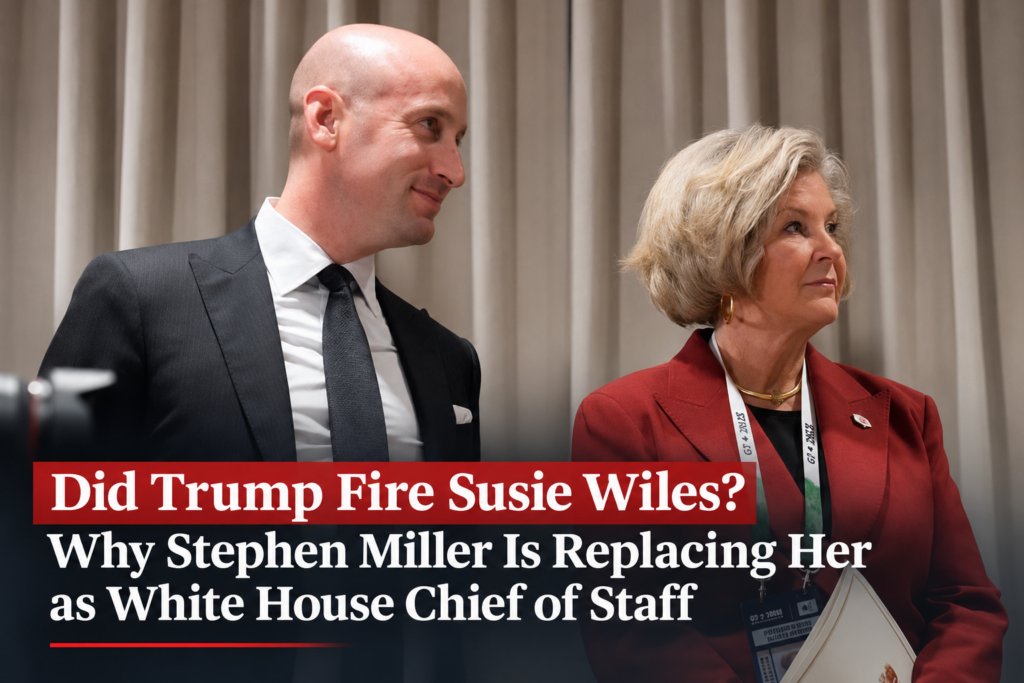
Did Trump Fire Susie Wiles? Why Stephen Miller Is Replacing Her as White House Chief of Staff
Nov
Updated November 7, 2026 | U.S. Politics
A major leadership change at the White House has sparked questions across the United States. Did Trump fire Susie Wiles? Why is Stephen Miller replacing her? And what exactly is the Trump Political Operation that Wiles is joining? The questions emerged after President Donald Trump announced that one of his closest political advisers would be leaving the administration’s highest-ranking staff position.
On November 6, 2026, Trump confirmed that Stephen Miller will replace Susie Wiles as White House chief of staff beginning Monday, November 9. The announcement came only days after Republicans suffered significant losses in the U.S. midterm elections, creating immediate speculation about whether the two events were connected. Although the timing has attracted attention, Trump has publicly denied that the election results prompted the change.
The departure also raises questions about Wiles’ future. Rather than announcing that she would leave his political circle entirely, Trump said she would move into his political operation. The announcement therefore marks both a change in White House leadership and a new chapter for an adviser who played a central role in Trump’s return to the presidency.
Did Trump Fire Susie Wiles? What the Latest Reports Confirm
The question “Did Trump fire Susie Wiles?” has become a central part of the discussion surrounding the White House announcement. Some coverage has described Wiles as being removed or replaced, while other reports emphasize her resignation. These descriptions may sound interchangeable, but they do not necessarily mean the same thing.
According to the Associated Press, Wiles submitted her resignation on Thursday, November 5, 2026. The following day, Trump announced that Stephen Miller would take over the chief of staff position and publicly thanked Wiles for her service. He also praised her performance and confirmed that she would continue working within his broader political organization.
The White House subsequently published an official announcement naming Miller as the 33rd White House chief of staff. The announcement presented the decision as a leadership transition and recognized Wiles’ contributions to the administration.
These details establish that Wiles is leaving her White House position and that Trump has selected a replacement. However, the public record does not fully explain every private conversation that led to her departure. It would therefore be misleading to describe an involuntary firing as an established fact without additional evidence.
For readers following the developing story, the clearest answer is that Susie Wiles has stepped down as White House chief of staff, and Stephen Miller has been named her successor.
Why Is Susie Wiles Leaving the White House?
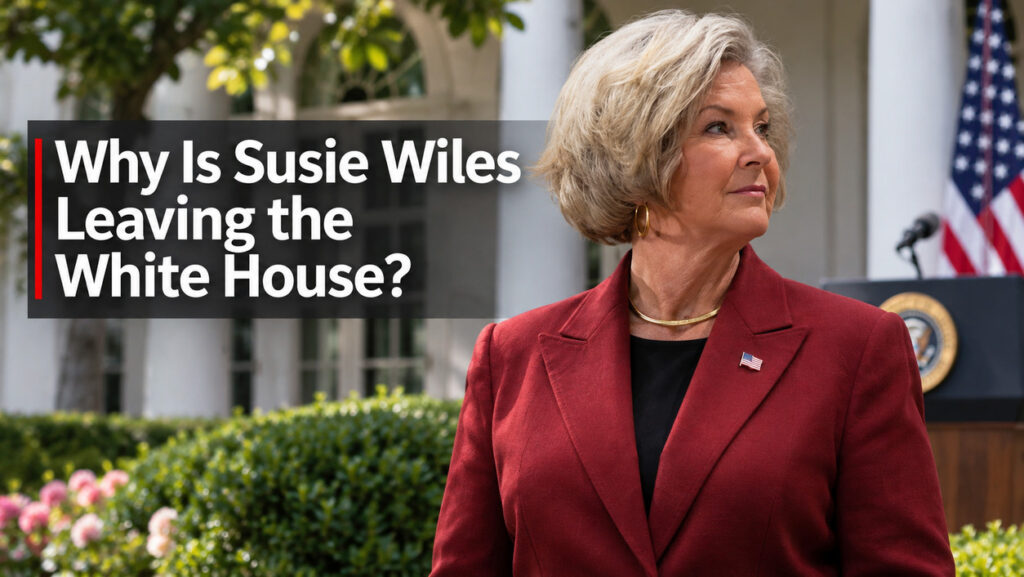
Susie Wiles’ departure is significant because she has been one of the most important figures in Trump’s political organization for years. She helped lead his 2024 presidential campaign and became the first woman to serve as White House chief of staff when his second administration began in January 2025.
Wiles developed a reputation as a disciplined political strategist who preferred working behind the scenes rather than becoming a regular public spokesperson. Her responsibilities included coordinating senior staff, helping manage access to the president, and ensuring that competing administration priorities were organized effectively.
Her departure follows a challenging period for Republicans. The November 3 midterm elections resulted in major Democratic gains, changing the political landscape that the administration will face during the remainder of Trump’s term. The proximity of those results to the announcement has made the leadership transition a subject of considerable political analysis.
However, Trump has rejected the idea that the election outcome directly caused the change. According to Associated Press reporting, the president described the decision as a matter of making a change rather than responding to the midterm results.
Wiles has also expressed appreciation for her time working in the White House. Her move to Trump’s political organization indicates that she is expected to maintain a professional relationship with the president, although the exact duties of her new position have not been publicly detailed.
What Is the Trump Political Operation?
Another frequently searched question is “What is the Trump Political Operation?” The phrase gained attention because Trump used it when explaining where Susie Wiles would work after leaving the White House.
In American politics, a political operation generally refers to the people, organizations, and strategic activities supporting a political leader outside the official responsibilities of government administration. Such activities can include campaign organization, political fundraising, communication strategy, relationships with party officials, and preparation for upcoming elections.
The phrase does not necessarily identify a single government agency or an officially defined White House department. In Trump’s announcement, it describes the political organization in which Wiles is expected to continue working after her departure from the administration.
This distinction is important. A White House chief of staff serves in an official government position, while political campaign organizations operate under different structures and legal responsibilities. A person can leave a formal administration role while continuing to work with the same political leader in a separate capacity.
As of November 7, the available announcement does not provide a complete job description for Wiles’ new role. It confirms the transition but leaves questions about her responsibilities, title, and organizational structure unanswered.
Who Is Susie Wiles? The Strategist Behind Trump’s Political Comeback
Susie Wiles built her career in Republican politics long before joining the White House. Over several decades, she gained experience managing political campaigns and developing organizational strategies for candidates competing in high-profile elections.
Her relationship with Donald Trump became particularly important during his presidential campaigns. She helped coordinate political operations and became a central figure in the campaign that returned Trump to the presidency in 2024.
Following that victory, Trump selected Wiles to become his White House chief of staff. Her appointment was historically significant because no woman had previously held the position.
As chief of staff, Wiles was responsible for helping manage one of the most demanding workplaces in American government. The position required coordinating advisers with different responsibilities, organizing the administration’s daily operations, and supporting communication between the president and senior officials.
Her departure removes a familiar figure from that role, but it does not erase her influence on Trump’s recent political career. Her work on his campaigns and during the opening years of his second administration remains part of the history of his political organization.
Who Is Stephen Miller, Trump’s New White House Chief of Staff?
Stephen Miller is a longtime Trump adviser who has been closely involved in the president’s political and policy agenda since the 2016 presidential campaign. Before his latest appointment, Miller served as White House deputy chief of staff for policy, making him one of the administration’s senior officials.
He is particularly associated with immigration policy and the administration’s approach to border enforcement. His work has involved helping develop policy initiatives and coordinating aspects of their implementation across the federal government.
Miller’s political approach has generated contrasting reactions. Supporters emphasize his loyalty to Trump and his commitment to carrying out the administration’s priorities. Critics, including Democratic lawmakers and immigrant-rights advocates, have challenged the legal, humanitarian, and practical consequences of policies he has supported.
The White House formally announced Miller’s appointment on November 6, identifying him as the administration’s incoming 33rd chief of staff. Vice President JD Vance, Secretary of State Marco Rubio, and other Republican officials publicly welcomed the appointment and thanked Wiles for her service.
Miller’s new position will involve responsibilities extending well beyond his previous policy portfolio. Instead of concentrating primarily on policy coordination, he will now help manage the broader White House staff and the flow of work reaching the president.
Why Stephen Miller’s Promotion Matters for the Trump Administration
The White House chief of staff is one of the most influential unelected positions in the American executive branch. Although the job does not require Senate confirmation, the person holding it can play an important role in organizing the administration, managing senior staff, and coordinating communication with the president.
A chief of staff may influence which issues receive attention, how meetings are organized, and how different parts of the government coordinate their responsibilities. The precise degree of authority varies from administration to administration and depends on the president’s management style.
Miller’s appointment is noteworthy because his professional background differs from Wiles’. Wiles is widely associated with political campaign management and organizational strategy, while Miller is known primarily for his work on policy and implementation.
That difference has prompted questions about whether the White House’s internal working style could change. Some observers see the appointment as a sign that policy implementation may receive additional attention, while others are focused on the potential implications for congressional relations and administration oversight.
Those interpretations remain assessments rather than confirmed outcomes. The practical effect of Miller’s appointment will become clearer after he assumes the role and begins managing the wider White House operation.
Did the 2026 Midterm Elections Lead to the White House Shakeup?
The timing of the announcement has become one of the most discussed aspects of the story. The 2026 U.S. midterm elections took place on November 3, and the results brought significant Republican losses and increased Democratic power in Congress.
Only three days later, Trump announced that Wiles would leave the chief of staff position and Miller would replace her. The close timing naturally led reporters and political observers to examine whether the election results influenced the president’s decision.
Associated Press reporting places the announcement within the broader consequences of the midterms. However, Trump has specifically denied that his decision was a reaction to the election.
Both facts matter. The personnel change happened immediately after the elections, but the available evidence does not establish the election results as the direct cause.
The new congressional environment may still affect the responsibilities of the incoming chief of staff. With Democrats holding greater influence in Congress, the White House will face additional demands involving legislative negotiations, oversight, and political communication.
These are responsibilities that any chief of staff would need to manage, regardless of the reasons behind the appointment.
What Does the White House Chief of Staff Actually Do?
The White House chief of staff is often described as the person responsible for helping organize the president’s daily work, but the position can involve a much broader range of responsibilities.
The chief of staff typically oversees senior White House personnel, helps coordinate schedules and meetings, and assists in managing the information presented to the president. The position can also involve working with congressional leaders, cabinet officials, federal agencies, and outside advisers.
In many administrations, the chief of staff plays an important role in balancing competing priorities. Different departments may want the president’s attention, and senior advisers may have different approaches to solving the same problem. The chief of staff helps establish a process for handling those demands.
The job also requires understanding both policy and organizational management. A successful transition depends not only on the incoming chief’s relationship with the president but also on the ability to coordinate a large and complex team.
That is why replacing a chief of staff often receives national attention. It can affect how the White House operates even when the administration’s publicly stated priorities remain unchanged.
Is Susie Wiles Still Working for Donald Trump?
Based on Trump’s announcement, Susie Wiles is expected to continue working within his political organization after leaving her White House position.
This is an important distinction because reports about a senior official departing the administration can sometimes create the impression that the person has severed all professional ties with the president.
In Wiles’ case, Trump specifically described her move into his political operation. The statement suggests a continued relationship, although the details of her responsibilities have not been fully explained.
Her experience managing campaigns and coordinating political strategy may remain relevant outside the White House. Nevertheless, readers should avoid assuming she will hold a particular title or manage a specific future campaign until those details are officially announced.
For now, the confirmed distinction is simple: Wiles is leaving a government leadership role but is expected to remain connected to Trump’s broader political network.
Could More White House Staff Changes Follow?
The announcement has also renewed public interest in whether additional White House personnel changes could occur after the midterm elections.
Leadership transitions sometimes create opportunities for presidents to reorganize staff responsibilities or reconsider how senior advisers work together. That does not automatically mean more departures are planned, but it helps explain why reporters continue to examine the administration’s staffing decisions.
As of November 7, Miller’s appointment and Wiles’ departure are confirmed. Other potential changes should not be presented as established facts unless supported by separate announcements or reliable reporting.
The administration is also preparing to operate in a changed congressional environment. That transition may place new demands on its political and legislative teams, making the organization of White House staff particularly relevant in the coming months.
Whether Trump makes additional changes remains an open question.
What Happens Next for Stephen Miller and Susie Wiles?
The next confirmed milestone is November 9, 2026, when Stephen Miller is scheduled to begin serving as White House chief of staff.
Because Miller already holds a senior position in the administration, he enters the role with experience working alongside Trump and other senior advisers. However, the broader management responsibilities of chief of staff will require him to oversee issues beyond his previous policy responsibilities.
For Susie Wiles, the immediate question is how her new political position will be structured. Trump’s announcement confirms that she will remain connected to his political organization, but additional details may be needed to understand what that means in practice.
The transition is also likely to remain a subject of political discussion because of its timing and the different roles Wiles and Miller have played in Trump’s administration.
For readers following the story, the most useful developments to watch are official announcements about Wiles’ new responsibilities and any changes to the White House’s leadership structure after Miller takes office.
Conclusion: What Trump’s White House Leadership Change Really Means
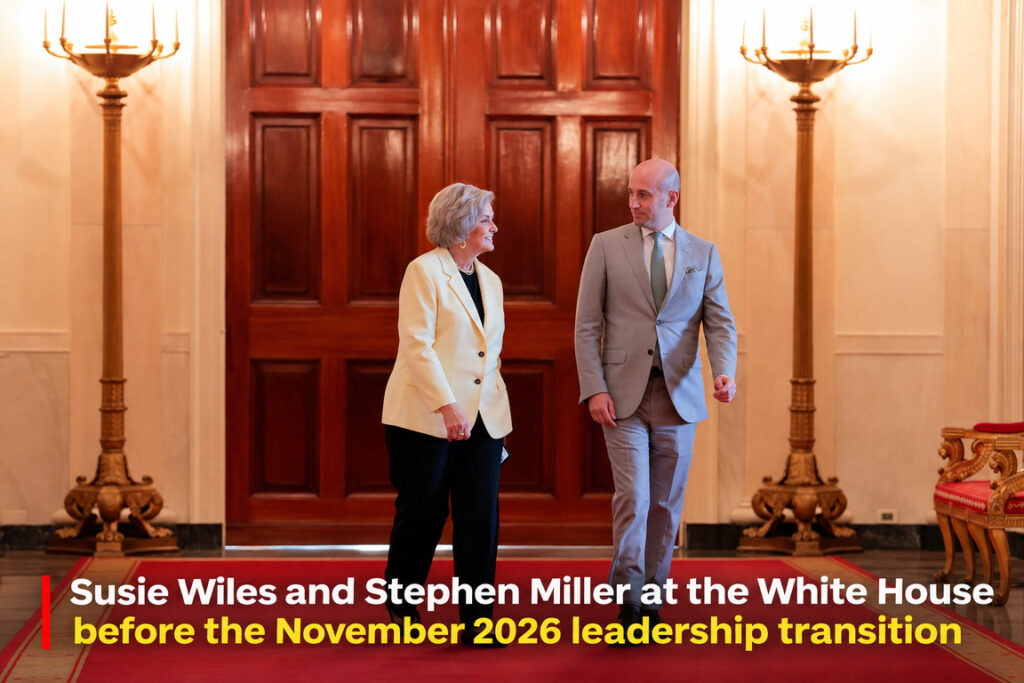
The decision to replace Susie Wiles with Stephen Miller marks an important leadership transition in Donald Trump’s second administration. On November 6, 2026, Trump confirmed that Miller would become the next White House chief of staff, with the appointment scheduled to take effect on November 9. Wiles, meanwhile, is expected to move into Trump’s broader political organization after serving as the first female White House chief of staff.
The question “Did Trump fire Susie Wiles?” has generated widespread interest, but the available reporting supports a more careful explanation than the word “fired” alone suggests. The Associated Press reported that Wiles submitted her resignation, while Trump publicly praised her work and announced her transition to another political role. The precise details of the private decision-making process have not been fully disclosed.
The timing of the change, only days after Republican losses in the midterm elections, adds political significance to the announcement. Trump has denied that the election results caused the decision, and that denial should be considered alongside the broader context reported by news organizations.
Miller’s appointment also raises important questions about how the White House will coordinate its work during the remainder of Trump’s term. His influence over administration policy is well established, but the full effects of his new management role cannot yet be determined.
For now, three facts define the story: Susie Wiles is leaving the White House chief of staff position, Stephen Miller is replacing her, and Wiles is expected to continue working within Trump’s political network. How those changes affect the administration will become clearer in the weeks ahead.
Explore Trump-Themed Collectibles
For readers interested in Trump-related memorabilia and collectibles, there are also themed items inspired by his political identity and recognizable MAGA imagery. The Trump Veto MAGA 2026 Hat offers a wearable design, while the Trump MAGA Advent Calendar 2026 brings the theme into a 24-day holiday countdown collection. Both are options for those interested in political-themed merchandise.

Frequently Asked Questions
Did Trump Fire Susie Wiles?
Trump confirmed on November 6, 2026, that Susie Wiles would be replaced as White House chief of staff. The Associated Press reported that Wiles submitted her resignation on November 5. Although some coverage has described the departure as a firing, the full details of the private decision have not been publicly established.
Why Did Trump Replace Susie Wiles?
Trump said he wanted to make a leadership change and denied that the decision was caused by Republican losses in the midterm elections. The complete reasons behind the transition have not been publicly disclosed.
Who Is Replacing Susie Wiles?
Stephen Miller, who previously served as White House deputy chief of staff for policy, has been named her successor.
When Does Stephen Miller Become White House Chief of Staff?
His appointment is scheduled to take effect on Monday, November 9, 2026.
What Is the Trump Political Operation?
The term broadly refers to Trump’s political organization and related activities outside formal White House government operations. Trump said Wiles would move into this operation, although her exact new responsibilities have not been announced in detail.
Is Susie Wiles Leaving Politics?
Not according to Trump’s announcement. She is leaving her official White House position but is expected to continue working within his political organization.
Who Is Stephen Miller?
Stephen Miller is a longtime Trump adviser who has played a significant role in developing and coordinating administration policies, particularly immigration and border enforcement measures.
Did the Midterm Elections Cause Susie Wiles to Resign?
Her departure occurred shortly after the November 2026 midterm elections, but Trump has denied that the election results prompted the change. A direct causal connection has not been publicly established.
What Does the White House Chief of Staff Do?
The chief of staff helps manage the White House staff, coordinate information and meetings, organize administration priorities, and assist the president in overseeing daily operations.
Keep reading
More from the Journal
Disney Starbucks Holiday Tumblers 2026: New Christmas Collection
Kimi Antonelli Is the 2026 F1 World Champion: The Youngest Champion in Formula 1 History
Anime Collectibles Worth Displaying: A Shelf Guide for Fans