

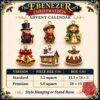
Ebenezer Christmas 2026 Advent Calendar
Original price was: $80.00.$67.50Current price is: $67.50.
Dickens’s Ebenezer Scrooge gives Christmas a story about memory, responsibility and the possibility of changing how we treat others. The Ebenezer Christmas 2026 Advent Calendar connects those themes with 24 daily reveals, offering readers and Christmas Carol enthusiasts acrylic keepsakes associated with a familiar literary tradition.
- Secure checkout with PayPal and major cards
- Tracked shipping, with a tracking number by email when your order ships
- Ships worldwide by air, so international orders do not wait on sea freight
- Damaged or wrong item? Replaced or refunded when reported within 15 days. Returns
- Questions? [email protected]

Ebenezer Christmas 2026 Advent Calendar
The Ebenezer Christmas 2026 Advent Calendar centres its countdown on a character whose transformation gives Christmas literature one of its most enduring stories. Ebenezer Scrooge begins A Christmas Carol isolated by his own choices; his encounters with the past, present and possible future lead him towards generosity and renewed human connection.
Charles Dickens’s novella was published on December 19, 1843, making its first appearance just before the holiday it would become closely associated with. Its combination of ghosts, winter streets and Christmas hospitality continues to give Scrooge a place in seasonal reading and decoration.
This calendar brings that literary subject into a December 1–24 countdown. Each numbered window reveals an acrylic decoration, gradually building a display around the Victorian Christmas theme.
Why Ebenezer Scrooge Is More Than a Christmas Miser
Scrooge’s significance comes from the movement of the story. His coldness is the starting point of a character journey that asks him to look again at his life and its effect on other people.
The ghost of Jacob Marley, his former business partner, introduces the warning. The spirits of Christmas Past, Christmas Present and Christmas Yet to Come then confront him with memories, lives unfolding around him and the consequences his behaviour could produce.
For a calendar built around daily anticipation, that attention to time is especially relevant. Looking backwards, noticing the present and considering what comes next are already part of the story’s structure.
The numbered windows do not establish a chapter-by-chapter retelling. Instead, the countdown creates an opportunity to return to Scrooge’s world a little at a time, with the decorations providing visual reminders of the subject.
The Victorian Reality Behind the Ghost Story
Dickens wrote A Christmas Carol with concerns extending beyond one fictional businessman. The British Library identifies an 1843 parliamentary report on child labour as an important influence, exposing conditions in which children worked in Victorian Britain.
The story’s figures of Ignorance and Want give those social concerns a direct presence within the supernatural narrative. Dickens connects personal behaviour with the wellbeing of people whose hardship can otherwise be ignored.
That context adds meaning to the calendar’s Victorian setting. Snowy streets and old-fashioned surroundings belong to a story in which winter comfort is unevenly shared.
For someone who values the book, the seasonal imagery can therefore carry more than nostalgia. It recalls Dickens’s invitation to pay attention to other people during a celebration often associated with home, food and companionship.
The Cratchits and the Meaning of Christmas Warmth
The household of Bob Cratchit, Scrooge’s clerk, provides another important part of the story. Its Christmas gathering places family affection and celebration alongside limited means, helping Dickens explore what makes the occasion meaningful.
The Dickens Project at the University of California, Santa Cruz, discusses how the novella presents goodwill and generosity as possible even amid poverty. The contrast gives the story’s festive moments their emotional weight.
This helps explain the calendar’s mixture of winter scenes and traditional Christmas details. Holly, ribbons and small festive motifs can be understood within a story that makes room for hospitality, shared meals and renewed relationships.
The Charles Dickens Museum similarly connects Dickens’s Christmas world with generosity, good food and ghost stories. Those elements belong together in the literary background of the design.
Calendar Contents and Specifications
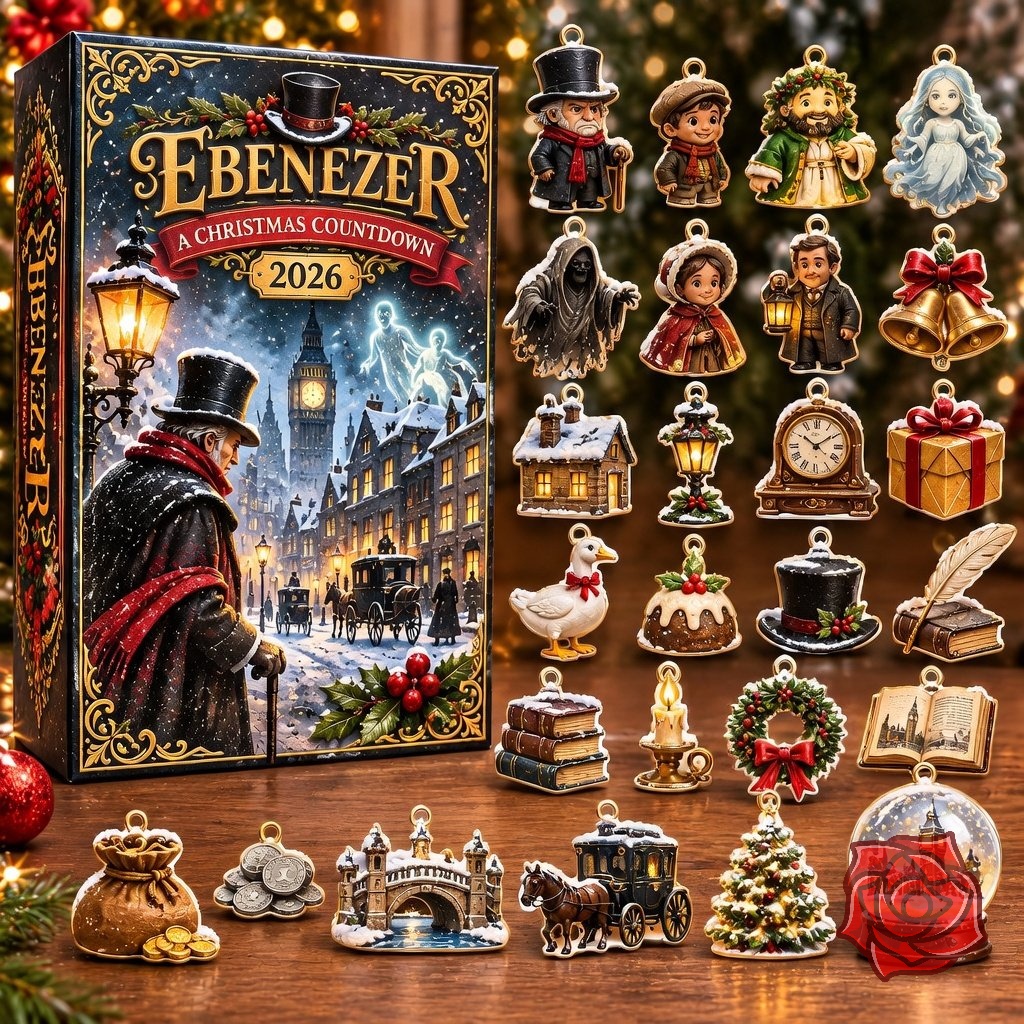
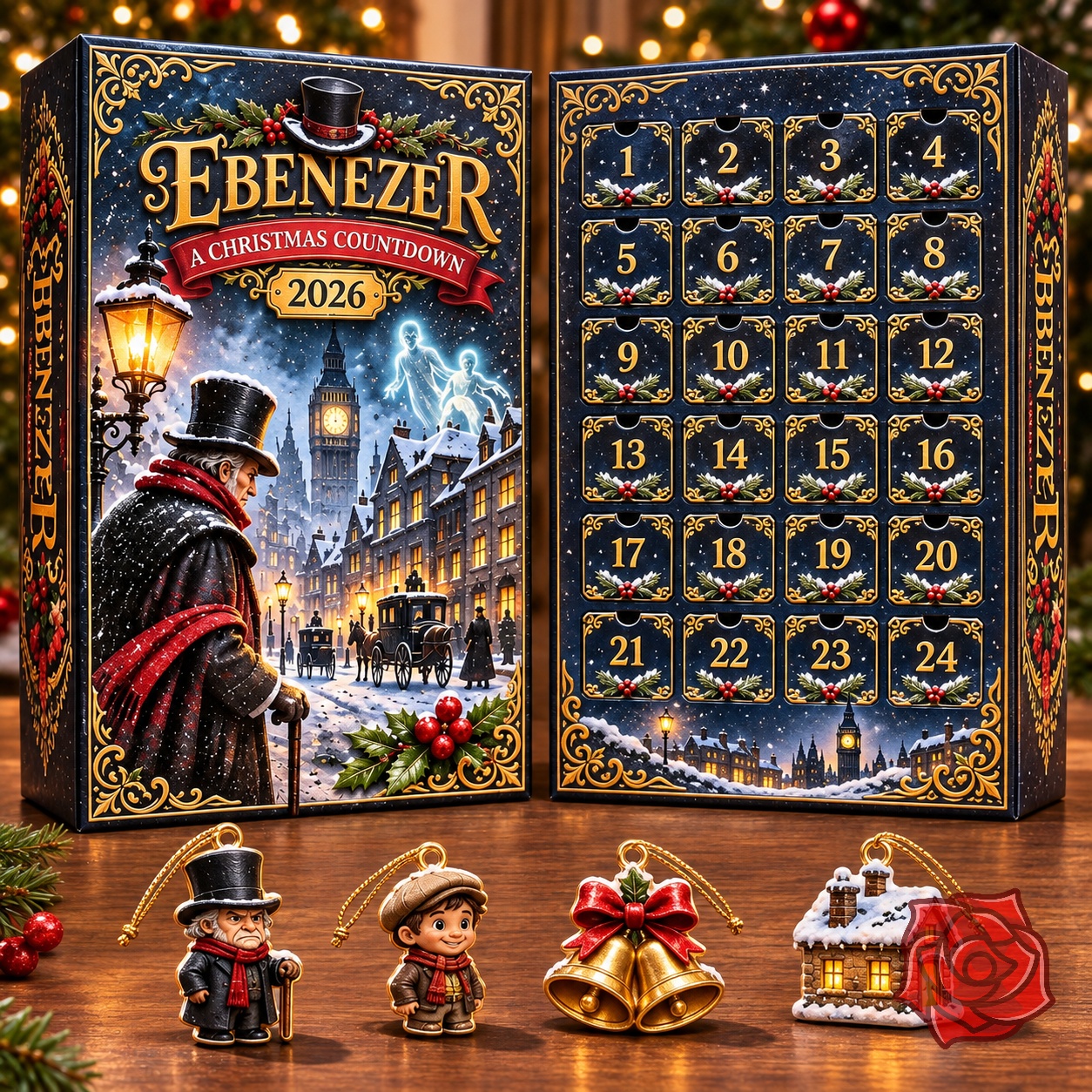
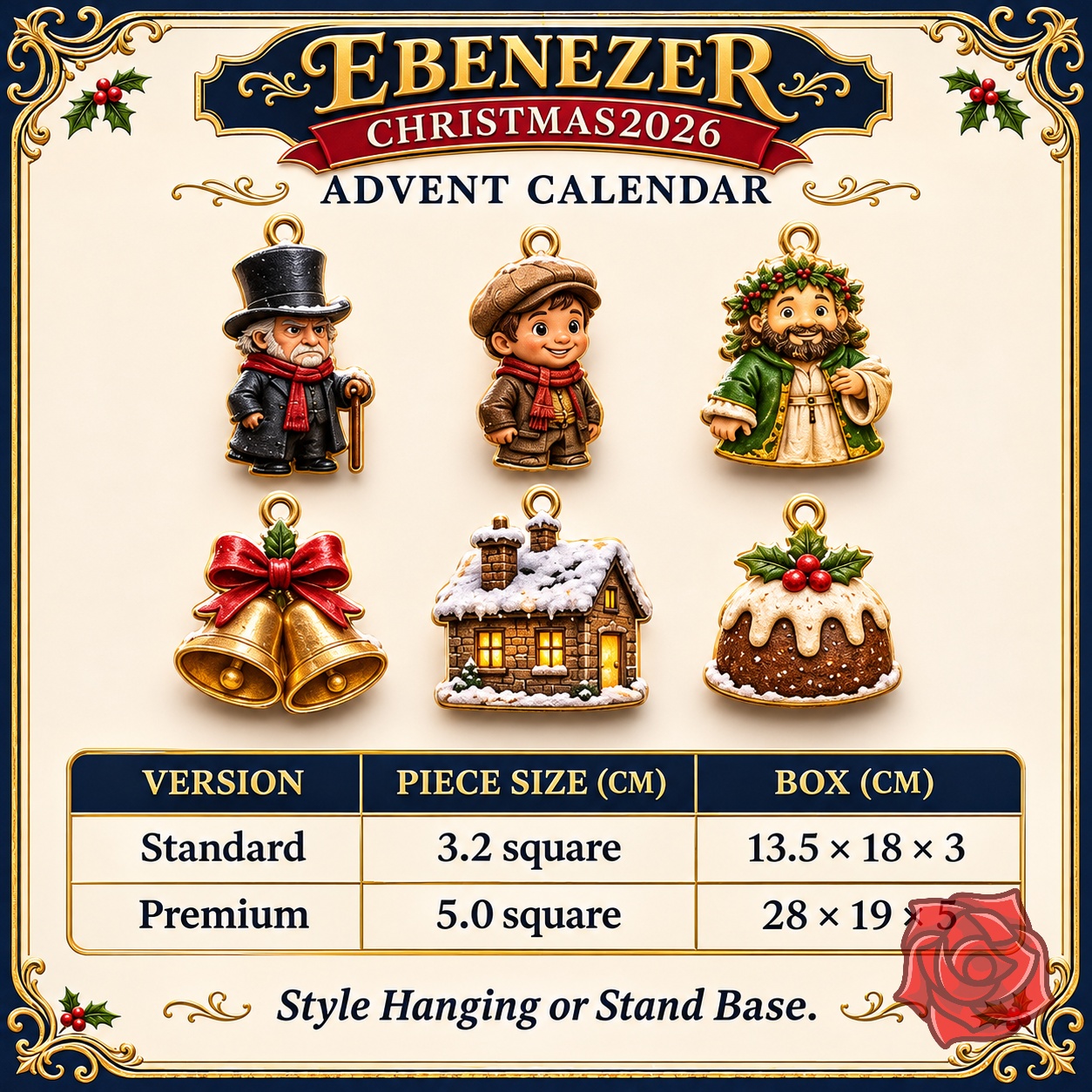
The calendar contains a paper outer box, moulded plastic inner tray and 24 acrylic (mica) pieces. Die-cut dotted lines guide the opening of each numbered window.
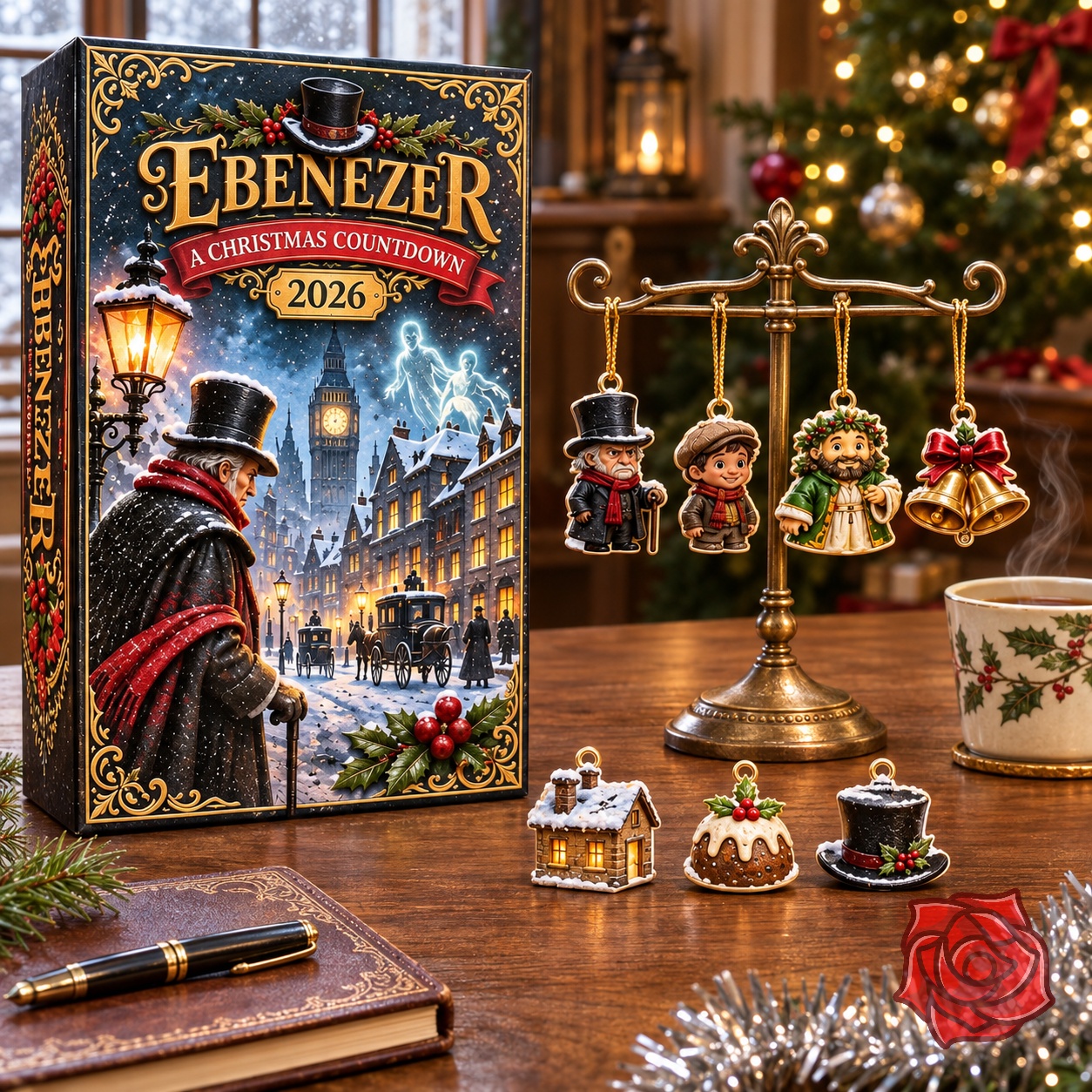
The dark navy and gold presentation carries “EBENEZER,” “A CHRISTMAS COUNTDOWN” and “2026” lettering. Snowy Victorian London scenes, Scrooge imagery, holly berries, red ribbons and Christmas Carol-themed miniature designs establish its subject.
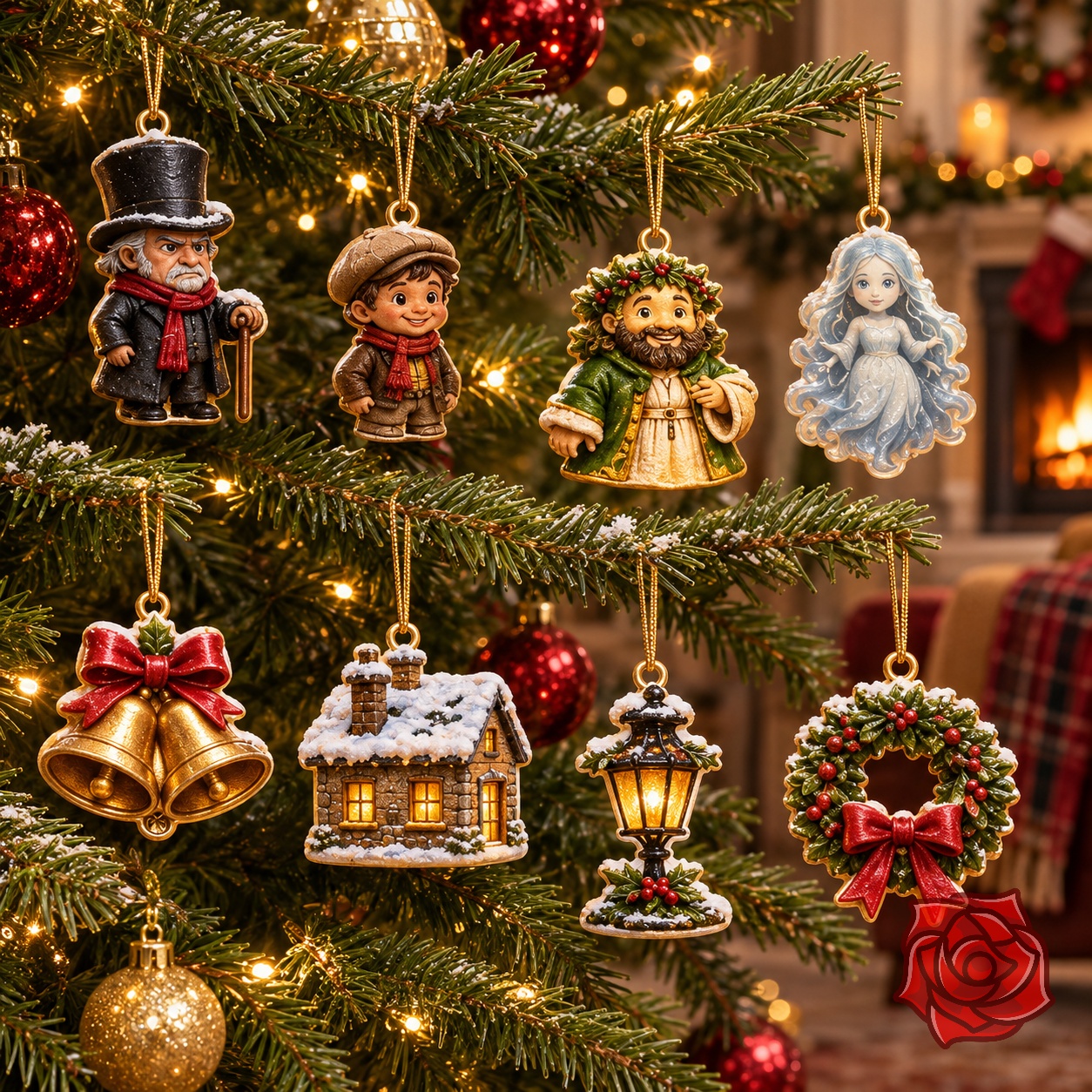
Each acrylic piece has double-sided printing, with one matte side and one glossy side. Depending on its supplied construction, it has either a hanging hole for a hook or ribbon, or a stand base for upright display.
| Specification | Details |
|---|---|
| Product Type | 24-day Christmas advent calendar with display pieces |
| Outer Box | Paper outer box with a moulded plastic inner tray |
| Contents | 24 acrylic (mica) pieces inside |
| Sizes | Standard; Premium |
| Printing | Double-sided acrylic print; one side is matte and the other is glossy |
| Piece Construction | Hanging ornaments with a hole for a hook or ribbon, or pieces with a stand base for upright display |
| Standard Measurements | 24 pieces, each 3.2 x 3.2 cm; box 13.5 x 18 x 3 cm, 135 g |
| Premium Measurements | 24 pieces, each 4.3 x 4.3 cm square or 4 x 5 cm rectangular; box 28 x 19 x 5 cm |
| Opening System | Die-cut dotted lines for opening one window each day |
Standard provides the smaller box and decoration format. Premium offers larger individual pieces and requires more room for both the calendar and the completed arrangement.
Bringing the Story Into a December Routine
The calendar can accompany an existing Christmas tradition: reading the novella, revisiting a favourite adaptation or discussing the story with someone encountering it for the first time.
One daily opening gives that activity a simple rhythm. A revealed decoration can join a nearby tree or upright arrangement while the book remains part of the evening.
For a gift recipient, the strongest connection is an established interest in Dickens, Scrooge or Victorian Christmas imagery. The literary subject gives a reason for selecting this calendar beyond its seasonal appearance.
The 2026 date identifies the intended Christmas edition. Its longer-lasting reference is the story itself, allowing the acrylic pieces to return to a literary or festive display after the initial countdown.
Opening, Preparing and Caring for the Pieces
Place the box on a stable, level indoor surface where the numbered windows remain accessible. Begin on December 1 and open one window each day through Christmas Eve.
- Open gently: Follow the die-cut dotted lines while supporting the surrounding paper.
- Prepare each decoration: Peel off the protective film before hanging or standing the acrylic piece.
- Use the supplied construction: Add a suitable hook or ribbon through a hanging hole, or use the stand base provided for an upright design.
- Clean carefully: Wipe with a soft, dry cloth and avoid abrasive contact with the printed faces.
- Handle by the edges: Reduce fingerprints and scraping when rearranging the pieces.
- Store together: Keep the collection dry and protected after Christmas, using the box and tray where practical.
The acrylic decorations can be reused in later displays. The paper windows are designed for daily opening, so the packaging should not be assumed to reset or reseal for another countdown.
Keep the small pieces where they will not be pulled, knocked down or treated as toys.
Frequently Asked Questions
What story does the calendar reference?
It draws on Charles Dickens’s A Christmas Carol, with Ebenezer Scrooge and Victorian Christmas imagery at the centre of the design.
Do the windows reveal sections of the book?
The confirmed contents are 24 acrylic decorations. Printed chapters, reading cards or a particular story sequence are not listed.
Can every piece both hang and stand?
Each piece comes with either a hanging hole or a stand base. Use the construction supplied with that design.
What should I do before displaying a piece?
Remove the protective film, then wipe gently with a soft, dry cloth. One printed side is matte and the other is glossy.
Can the calendar be used again next Christmas?
The acrylic decorations can be displayed again. The opened paper windows are not confirmed as refillable or resealable.
For someone who returns to Scrooge’s story each December, the calendar gives that reading tradition a daily decorative companion. Explore more literary keepsakes and seasonal decorations.
How long will my order take?
Delivery time is production plus transit. Production takes 2 to 5 business days, then your parcel ships from the warehouse closest to your address.
Orders ship worldwide by air, including international deliveries.
| Shipping option | Cost per order | Transit after dispatch |
|---|---|---|
| Standard Shipping | $7 | 7 – 12 days |
| Express Shipping | $14 | 5 – 10 days |
Tracking
We email a tracking number as soon as your order is dispatched. You can follow it on our Track Your Order page. Tracking can take 24 to 48 hours to start updating.
If something is wrong
If your order arrives damaged, faulty or not what you ordered, email [email protected] within 15 days of delivery with your order number and a photo, and we will replace it or refund it. Orders can be changed or cancelled within 6 hours, before production starts.
Full details: Shipping Policy · Returns & Refunds
Be the first to review “Ebenezer Christmas 2026 Advent Calendar”
Related products

Advent Calendars
Advent Calendars
Advent Calendars
Advent Calendars

Reviews
There are no reviews yet.