
Collectibles
Anime Collectibles Worth Displaying: A Shelf Guide for Fans
Oct
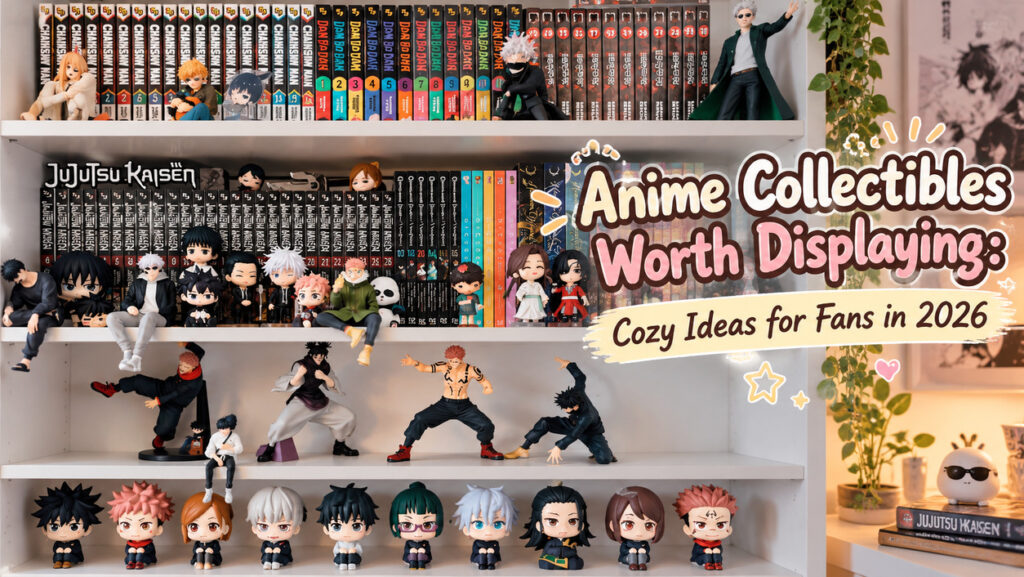
Most anime fans already own the start of a display without planning one. A figure next to the monitor, an acrylic stand on the desk, a row of manga that has outgrown the drawer. This guide covers the anime collectibles worth displaying, how much room each type needs, and how to arrange a shelf so the pieces you care about actually get seen.
At a glance
- Scale figures and chibi figures are the easiest anchors for a shelf. One well-placed figure does more than five crowded ones.
- Acrylic stands, mini figures and keychains fill small spaces and work on a desk or a single floating shelf.
- Manga volumes and wall art give a display structure and context without taking shelf depth.
- Mix heights, leave gaps, and light the shelf. Those three habits improve any collection at zero cost.
- Rotate pieces by season instead of buying more. A display that changes stays interesting.
Why Anime Collectibles Are Different From Other Decor
A poster or a vase is chosen for how it looks. An anime collectible is chosen for what it reminds you of: a series you watched at the right time, a character whose arc stuck with you, a story you finished and then sat with. That is why two fans with the same budget end up with shelves that look nothing alike. One is shonen energy from top to bottom, the other is slice-of-life pastels and a single dramatic centerpiece.
That connection also sets the rule for everything below. A piece earns a spot on the shelf because you like seeing it every day, not because it is rare or trending. Price and popularity are poor filters. “Would I notice if this were gone” is a better one.
Figures: The Anchor Piece
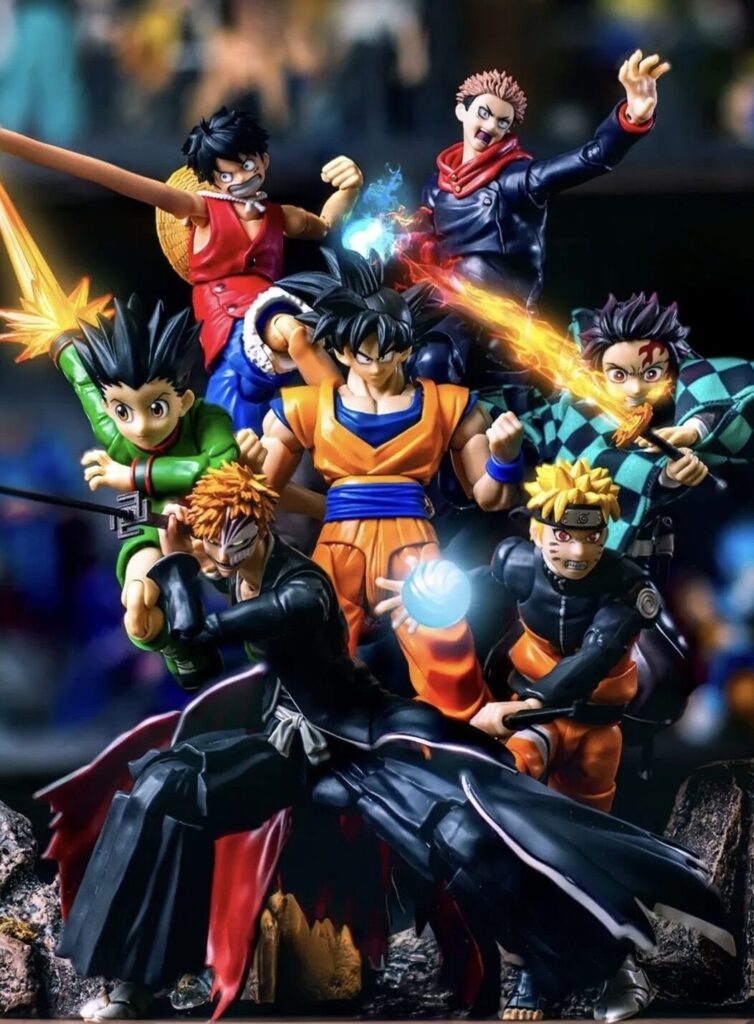
If you only display one type of anime collectible, make it a figure. A posed figure gives a shelf a focal point and tells a visitor which series you follow before they read a single spine. Larger scale figures with dynamic poses command a shelf on their own. Smaller, simpler sculpts are easier to fit on a desk or between books.
Start with your favorite character rather than trying to complete a set. A single figure you chose on purpose looks more intentional than a half-finished lineup. Group the rest by series, by color, or by pose as the collection grows. Rearranging is part of the hobby, not a sign that you did it wrong the first time.
Chibi and Nendoroid-Style Figures
Chibi-style figures bring a lighter tone than full-scale sculpts. Their size makes them easy to arrange and their faces read clearly even from across the room. They sit comfortably on a gaming desk, beside a monitor, or on a floating shelf where a tall figure would look top-heavy.
They also mix well. A row of chibi characters from different series still looks coherent because the proportions match. If your taste spans several shows, this is the format that lets you show all of them on one shelf without a visual argument.
Acrylic Stands: Small Footprint, Lots of Color
Acrylic stands are the most underrated anime collectible for display. They are flat, light, and bright, and a stand takes a fraction of the depth a figure needs. If you have a narrow shelf or a windowsill, this is the format that fits.
Stands layer well behind smaller objects or in front of manga. A row of stands from several series adds color without the weight of a dozen figures. The trade-off is durability: thin acrylic scratches and bends, so keep stands away from the edge of a busy desk and out of direct sun, which fades the print over time.
Mini Figures, Blind Box Pieces and Trading Figures
Small figures do a job the big ones cannot. They fill the gaps between larger pieces, add depth to the front of a shelf, and give people a reason to lean in. A display with one scale figure and six minis in front of it looks layered. The same figure alone on a bare shelf looks unfinished.
Minis are also the practical choice for small spaces, a nightstand, or a desk that still needs room for a keyboard. One warning from experience: tiny pieces are the easiest to overbuy, because there is always room for one more. Set a shelf limit before you start.
Plush Collectibles
Not every anime collectible should be hard plastic or acrylic. A plush breaks up a shelf of glossy figures and makes a room feel lived in rather than curated. A single plush on a chair, a bed, or the end of a shelf softens the whole setup.
Plush suits fans who want a relaxed room more than a collector’s cabinet. It is also the format that survives being picked up, moved, and handed to a visiting niece. Keep plush off the floor and away from the kitchen, and wash tags and small accessories separately if the maker allows it.
Wall Art: Display Without Using Shelf Space
Posters, framed prints, fabric wall scrolls and canvas boards are the fastest way to make a room read as yours. They use wall space, which most rooms have more of than shelf space, and they can be swapped in minutes when your favorite series changes.
Wall art also ties a shelf together. Three figures under a print from the same series look like a planned display. The same three figures under a blank wall look like storage. If your collection is modest, this is where the biggest visual gain per dollar sits.
Manga Volumes as Display Pieces
Manga is easy to forget as a collectible because it also happens to be the thing you read. On a shelf, a complete run adds color blocks, consistent spine heights, and the series name in large type. Pair a run with one figure or acrylic stand from the same story and the shelf explains itself.
Manga also gives a display its context. Figures show the characters; the volumes show the source. Collectors who display both tend to end up with shelves that feel balanced rather than merch-heavy. Store volumes upright and out of sunlight so the spines do not yellow unevenly.
Keychains, Pins and Small Accessories
Keychains, enamel pins, badges, charms and straps rarely get called display pieces, yet they fill the awkward spaces nothing else can: a cork board, the edge of a monitor, a desk organizer, a wire grid above the shelf. They also let you represent a dozen series without buying a dozen figures.
Treat accessories as detail, not structure. A grid of pins behind a figure adds texture. A grid of pins with nothing in front of it reads as a shop display. Use them to support the bigger pieces.
How Much Space Does Each Type Need?
The table below is a planning guide, not a measurement. Use it to decide which formats fit the shelf you actually have before you buy.
| Collectible type | Space needed | Best for | Watch out for |
|---|---|---|---|
| Scale figure | Full shelf depth, clear height above | A focal point for the main shelf | Dust, sun fading, overcrowding |
| Chibi or nendoroid-style figure | Shallow shelf or desk edge | Mixing several series in one row | Small parts going missing |
| Acrylic stand | Very little depth, moderate height | Narrow shelves and windowsills | Scratches, bending, UV fading |
| Mini or blind box figure | Minimal, works in gaps | Front-row detail and small rooms | Overbuying |
| Plush | Flexible, any soft surface | Softening a room full of plastic | Dust and pet hair |
| Wall art | Wall space only | Tying a shelf to a series | Sun fading, cheap frames warping |
| Manga run | Shelf width by the volume | Structure and context | Spine fading in sunlight |
| Pins and keychains | Cork board or grid | Filling odd corners | Looking like retail if overdone |
Browse the figures, minis and display pieces currently in the Collectibles range, or see everything in the shop.
Arranging the Shelf
Most display problems are arrangement problems, not purchase problems. Three habits fix nearly all of them.
Mix Heights and Formats
Put one tall piece toward the back, mid-height pieces in the middle, and minis or stands in front. Add a manga run or a print behind the group so the eye has something to land on. Shelves where every item is the same height and material look flat, no matter how good the individual pieces are.
Leave Empty Space
A gap is not a missing item. It is what makes the neighboring piece visible. When every inch is full, the figures blur into each other and the shelf reads as clutter. Choose your two or three favorites as focal points, give them room, and let the small pieces support them.
Use Soft Lighting
A warm desk lamp, a shelf light bar, or a low LED strip changes how a collection looks after dark. Lighting picks out the sculpt detail on figures and the color in acrylic stands, and it separates the display from the rest of the room. Avoid cold, harsh light aimed straight down, which flattens faces and casts hard shadows.
Small Shelves Still Work
You do not need a glass cabinet. A single bookshelf, a desk corner, one floating shelf, or a nightstand can hold a display that looks complete. In fact, small displays are often easier to get right because every piece has to earn its place.
With limited space, choose only what you like most. Let one or two larger pieces lead, add a few small details, and stop. If you want to grow, grow sideways with a second shelf rather than packing the first one tighter.
Rotate by Season Instead of Buying More
A display that never changes stops being noticed, including by you. Some collectors swap figures in autumn and winter, group characters by color for a month, or build a corner around one series and then move on. Even small changes refresh a shelf and bring older pieces back into view.
Seasonal rotation also fits well with gift season. If you are buying for an anime fan, a piece that slots into an existing shelf is easier to get right than a large statement figure. Our Christmas gift guide is organized by fandom for exactly that reason, and a themed advent calendar gives a collector 24 small pieces to rotate through December.
Collect What You Want to Look At
This is the only rule that matters in the end. A collectible does not need to be rare, expensive, or popular to deserve shelf space. If it makes you pause for a second when you walk past, it has done its job. If you keep it only because it was hard to find, it is taking room from something you would enjoy more.
The same thinking applies to any fan collection. If your interests cross over into games, the approach in our gaming collection guide is nearly identical: start with what you love, mix formats, leave space. And if you are curious how the collectibles we sell are made, packed and shipped, we wrote it down in Behind Our Shop.
New figures, stands and display pieces are added through the season.
Frequently Asked Questions
What anime collectibles are easiest to display?
Figures, acrylic stands, manga volumes, mini figures and wall art. All of them work on an ordinary bookshelf, a desk, or a single floating shelf without special cases or lighting.
Are anime figures worth displaying if I only have one or two?
Yes. One figure placed with room around it and a print or manga run behind it looks more deliberate than a crowded row. Quantity is not what makes a display work.
How do I display anime collectibles in a small room?
Use wall art for the series identity, one shelf for a focal figure and a few minis, and acrylic stands for anything else. Leave gaps so the pieces stay visible, and skip formats that need full shelf depth.
Can manga be part of an anime display?
Yes, and it should be. A complete run adds color and structure, and it gives the figures their context. Pair a run with one piece from the same series for the simplest finished look.
Are small anime collectibles worth buying?
For display, yes. Minis, pins and keychains fill the front row and odd corners that larger pieces cannot, and they let you represent many series in little space. Set a limit so they stay detail rather than clutter.
How do I protect figures and stands from damage?
Keep them out of direct sunlight, which fades paint and acrylic prints, and dust them with a soft brush rather than a cloth that can catch small parts. Put fragile pieces toward the back of the shelf, away from the edge.
How do I make my anime shelf look better without buying anything?
Rearrange by height, remove a third of the items, and add a lamp. Those three steps fix most shelves. Then rotate pieces every season so the display keeps changing.
Build the Shelf That Looks Like You
Anime collectibles are worth displaying because they turn a room into a record of the stories you care about. A figure, a stand, a run of manga, a plush at the end of the shelf. None of it needs to be rare or expensive. It needs to be chosen.
Start with the piece you already love most, give it space and light, and add slowly. The shelf that feels like your own will always beat the one that copies someone else’s. For more display and collecting guides, see the OutHutck Journal.
Keep reading
More from the Journal
Disney Starbucks Holiday Tumblers 2026: New Christmas Collection
How to Build a Gaming Collection in 2026: A Practical Guide
Why Themed Advent Calendars Are Fun to Collect in 2026