
Collectibles
How to Build a Gaming Collection in 2026: A Practical Guide
Oct
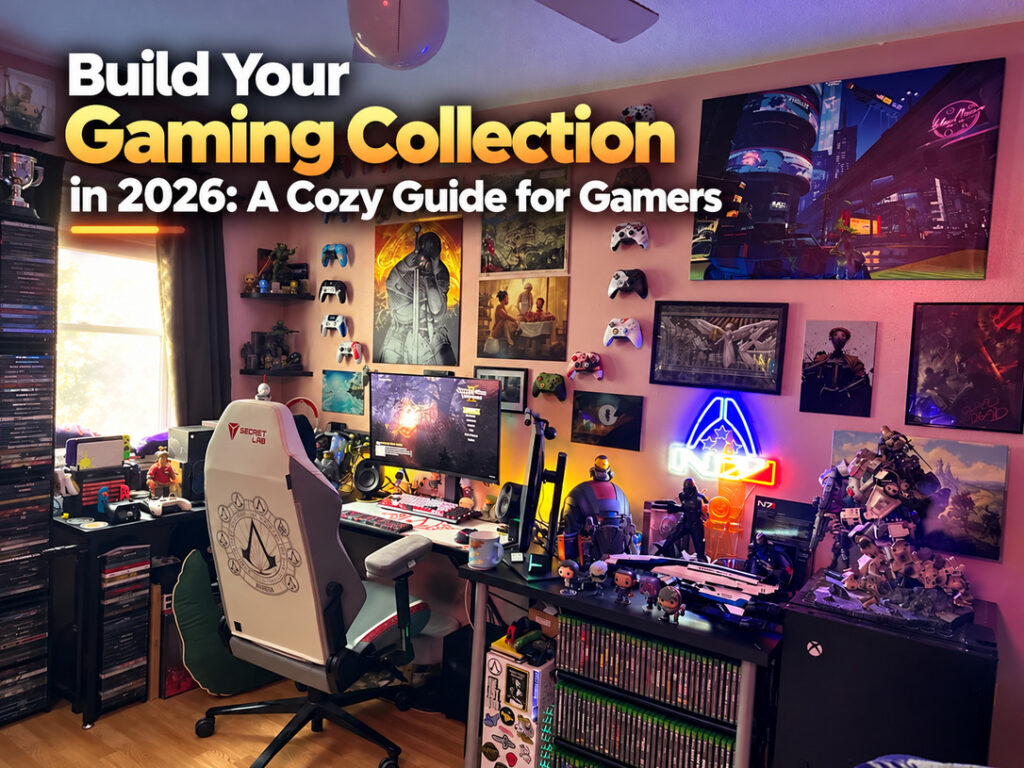
Most gaming collections start by accident. A figure ends up next to the monitor, an old controller never makes it to the trash, a game box from childhood survives three moves. If you want to build a gaming collection on purpose, the method is simple: start with the games that mean something to you, pick one theme, and let the shelf grow at its own pace. This guide covers what to collect, how to display it, and how to keep it from turning into clutter.
At a glance
- Start with one game, character or console generation. Branch out once that small set feels complete.
- Figures, physical games, board games, wall art and mini collectibles each solve a different display problem.
- Empty space makes a shelf look better. Leave room for what comes next.
- Sunlight fades boxes and prints. Keep displays out of direct light and dust them.
- A collection is never finished, and it does not need to be.
Start with the games you actually love
The fastest way to end up with a shelf you do not care about is to collect what everyone else is collecting. Trending items look good in photos for a month. A figure from the game you played for two hundred hours still looks good to you in five years.
Think about the games that stuck. The one you finished three times. The character you have liked since you were twelve. The game you played on the couch with a sibling or a roommate. Those are the memories that make a collection personal, and they make buying decisions easier. The only question you need to ask about a new piece is whether you would be glad to see it on your shelf every day.
Pick one theme before you pick anything else
A new collector sees a hundred things worth owning and wants all of them. That is how a shelf becomes crowded before it becomes interesting. A better starting point is one narrow theme: a single franchise, a single character, one console generation, or one genre such as RPGs, horror, racing or farming sims.
When that small set starts to feel complete, you have learned two things. You know what kind of collector you are, and you know what display space you have. Both make the next theme easier to choose. You are not locked in. The theme is a starting point, not a rule you have to follow forever.
Your collection does not need to look like anyone else’s
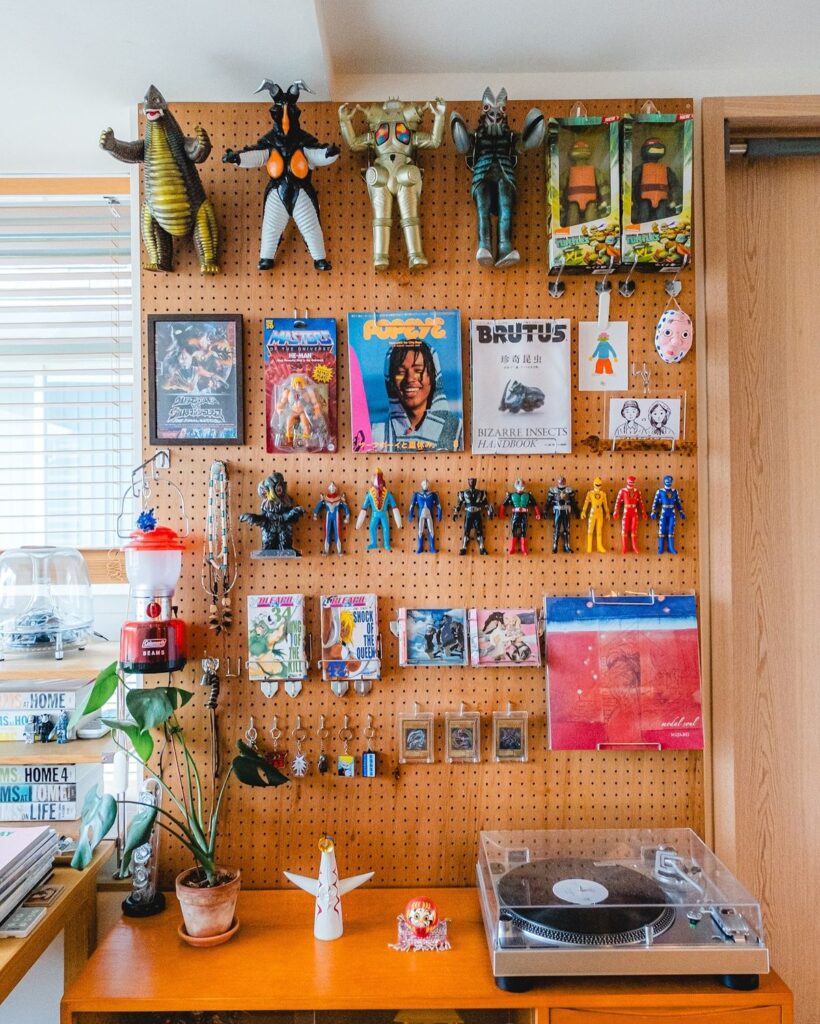
Some collectors want clean shelves with matching figures in matching poses. Others mix cartridges, new figures, controllers, board games, prints and souvenirs on the same wall. Both approaches work. The difference is intent, not budget.
Let the collection match the games you like. Bright, colorful games can mean a bright, colorful shelf. Dark fantasy and horror titles can mean a moodier display with fewer pieces and more contrast. If retro gaming is your thing, let the old hardware be the centerpiece instead of hiding it behind newer items.
What to collect, and what each type is good for
Different kinds of pieces do different jobs on a shelf. Figures draw the eye. Boxed games add color and structure. Board games add height. Mini collectibles fill gaps. Wall art ties a corner together without using shelf space. The table below is a quick way to match a collectible type to the space you have.
| Type | Space needed | Cost level | Best for |
|---|---|---|---|
| Figures and statues | Medium to high | Medium to high | A focal point on a desk or shelf |
| Physical games | Low per item, grows fast | Low to medium | Color, spine art and a visible library |
| Retro consoles and controllers | Medium | Varies | Nostalgia and a sense of gaming history |
| Board games | High | Medium | Height on a shelf and something you can actually play |
| Wall art and prints | Wall only | Low to medium | Making a small shelf feel like a finished corner |
| Mini collectibles, pins, keychains | Very low | Low | Filling gaps and small apartments |
Figures are the easiest place to begin
One or two figures change the feel of a desk immediately. You do not need a complete set. Buy your favorite character first, then group later additions by game, series or color. Rearranging the same three figures until the layout looks right is a normal part of the hobby.
Retro pieces carry their own charm
An old cartridge, a worn controller or a console from another era brings back a specific period of your life, even when the hardware feels primitive next to a modern system. For younger collectors, retro items are a way to explore gaming history they never lived through. One console and a handful of games are enough. Placing them next to modern figures turns a shelf into a short timeline.
Physical games still earn their shelf space
Digital libraries are convenient. Physical copies give you cover art, spine art, a manual or a collector’s edition insert, and something to hold. You do not need every release. A shelf of ten games you love says more about you than a wall of titles you barely remember playing, and it is far easier to keep organized.
Board games add a second use
Board games inspired by game worlds do two things at once. The box looks good on a shelf, and you can take it down and play it with friends. A large box also adds height and color, which helps balance a shelf full of small items. Our Collectibles range covers games, figures and display pieces if you want to see what a mixed shelf can hold.
Wall art makes a small collection feel bigger
If shelf space is the limit, move up the wall. Posters, maps, framed prints and canvas panels change the atmosphere of a room without taking floor space. Three figures on a shelf look intentional when there is matching art behind them. Wall art is also the easiest part of a collection to change when your interests shift.
Tiny collectibles deserve a place too
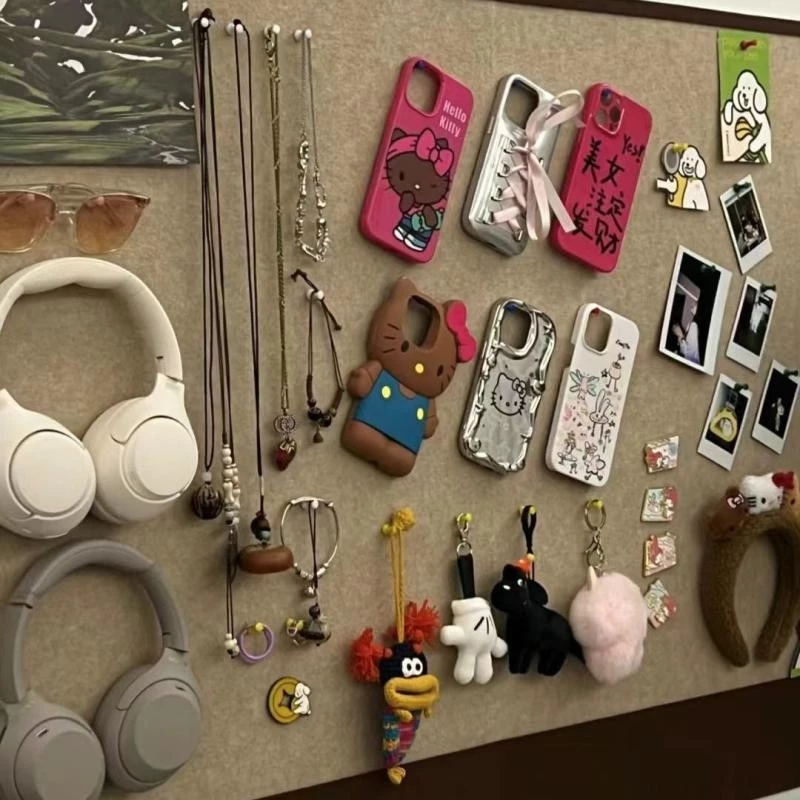
Mini figures, pins, keychains, tokens, acrylic stands and desk accessories fill the gaps between larger pieces. They are the right choice for a small apartment or a shared room. A few placed with care make a desk feel personal without making it feel crowded. The one warning: there is always room for one more, so they add up quickly.
Do not fill every empty space
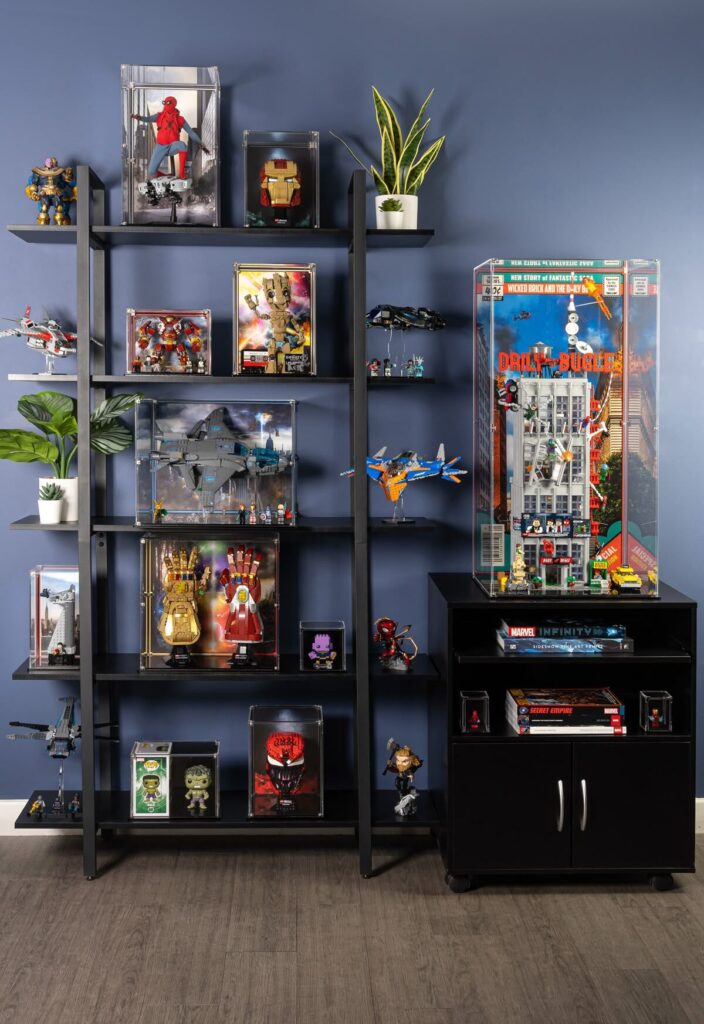
A new shelf makes every gap look like a problem. It is not. When every inch is full, pieces blur into each other and nothing stands out. Space between items is what lets your favorite figure read as a favorite.
Empty space is also practical. Your collection will grow whether you plan for it or not, and a shelf with room on it does not need to be rebuilt every time something new arrives.
Quality over quantity, and mixing over matching
A big collection is impressive for about a minute. Ten pieces you genuinely like hold up better than fifty bought because they were trending. Before adding something, ask three questions: Will you still like it next year? Does it connect to a game you care about? Does it make the display better or just fuller?
Within those limits, mix formats. A figure beside a boxed game, a controller behind them, a small print or mini collectible in front. Different heights and shapes give a shelf depth, and mixing means you are never waiting on one specific product line to make progress. The same principle runs through our guide to anime collectibles worth displaying, where figures, manga and acrylic stands do the work together.
Build a corner, not a room
You do not need a dedicated gaming room. A desk, one shelf and a bit of wall is enough. Put the pieces you like most at eye level where you see them while you play. Larger objects go toward the back, smaller pieces in front, and wall art connects the two.
Use what you collect. Play the board game, drink from the mug, use the controller. Rare or fragile pieces deserve a case, but a collection that is part of daily life feels more like yours than one behind glass.
Figures, games, drinkware and display pieces across sports, anime, gaming, movies and music.
Keep a record and take care of the pieces
Once a collection passes a couple of shelves, a simple record helps. A note on your phone, a spreadsheet or a photo album is enough. It stops duplicate purchases, and comparing today’s shelf with a photo from two years ago is one of the quiet pleasures of collecting.
Care is mostly about light and dust. Direct sunlight fades printed boxes, posters and some painted figures over time, so keep displays away from windows that get afternoon sun. Dust settles on every surface of a figure, so a soft brush or microfiber cloth every few weeks keeps things sharp. If you keep original packaging, store it flat somewhere dry instead of crushing it at the back of a closet. Even if you never sell anything, the boxes make moving easier.
Let trends inform, not decide
Gaming culture moves fast. One title dominates for a month and a new one replaces it. There is nothing wrong with buying something because it is popular, and trends sometimes lead you to a game you end up loving. The problem is a collection that is only a snapshot of what was popular online last season.
Mix new favorites with the games and characters that have stayed with you for years. That balance is what gives a shelf personality. And remember that there is no deadline. Finding one piece after months of searching, bringing it home and giving it a place is the part most collectors enjoy most. A collection built slowly has time to become part of the room.
Gifting and seasonal pieces
Collections also grow through gifts. If you are shopping for a gamer, a figure of a character they already talk about beats a generic accessory, and our Christmas gift guide is organized by interest for exactly that reason. Themed advent calendars are another way to add to a collection one piece at a time over December. We explain the appeal in why themed advent calendars are fun to collect.
If you order from us, every piece is made to order and checked before it ships. You can read what happens between checkout and your door in Behind Our Shop.
Frequently Asked Questions
How do I start a gaming collection?
Start with one game, character, franchise or console you genuinely like. Pick a few pieces connected to that interest, give them a shelf or a corner of a desk, and expand only when that small set feels complete.
What can go in a gaming collection?
Physical games, consoles, controllers, figures, statues, board games, posters, art prints, mini collectibles, pins, keychains, drinkware and any other item connected to the games you play.
Does a gaming collection have to be expensive?
No. Some of the most meaningful pieces are inexpensive items tied to a memory or a favorite game. A collection is measured by how much you like looking at it, not by what it cost.
How can I make my gaming shelf look better?
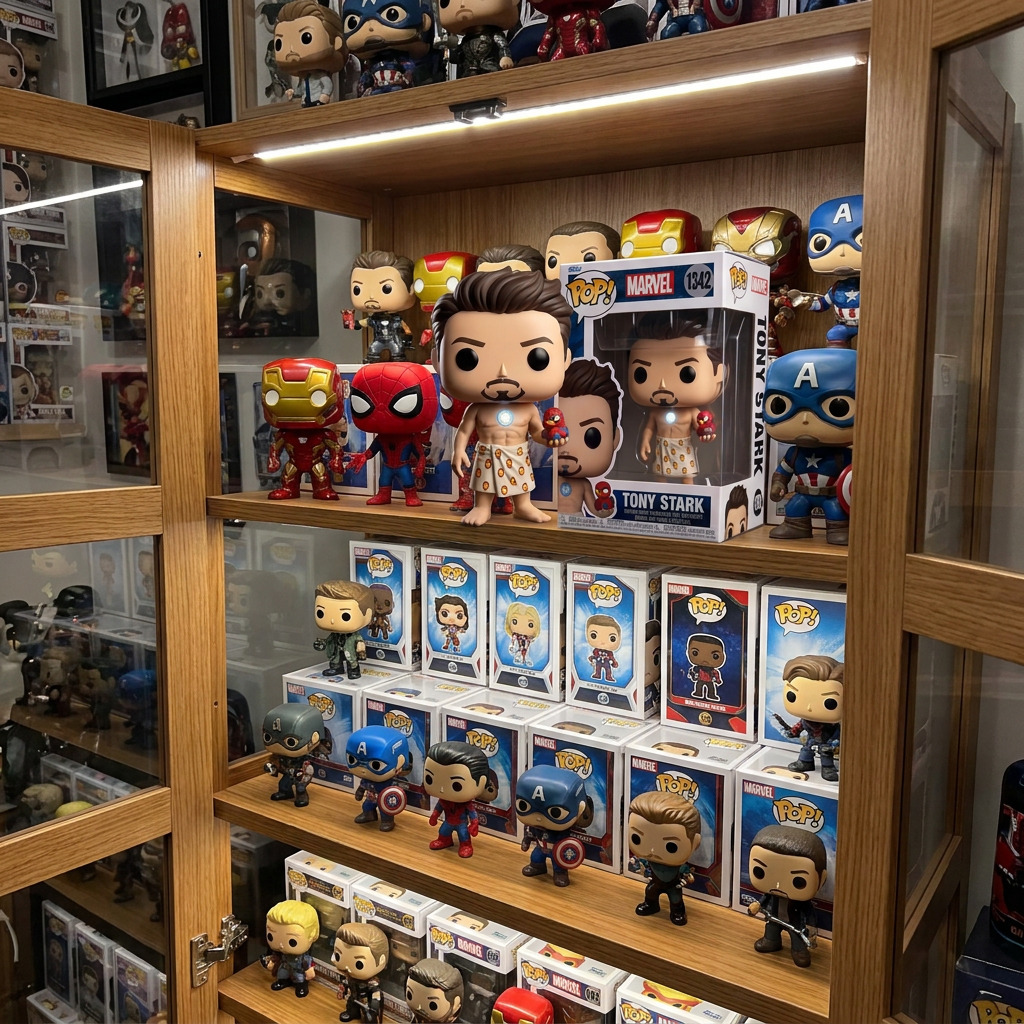
Mix heights and formats, group related pieces together, leave space between items, and add wall art or soft lighting behind the display. A lit cabinet or an LED strip under a shelf makes figures read more clearly.
Are physical games still worth collecting?
For collectors who value cover art, box design and a visible library, yes. Keep only the titles that matter to you and the shelf stays manageable.
Should I keep the original boxes?
If you have the space, yes. Boxes protect figures during moves, keep sets together and are easier to store flat than most people expect.
How fast should I build a collection?
There is no right speed. Slow collecting usually works better because each new piece gets time to feel like it belongs before the next one arrives.
A collection that feels like you
Building a gaming collection comes down to a few decisions: what you love, how much space you have, and how fast you want to go. Figures, physical games, retro hardware, board games, wall art and mini collectibles each have a role, and you do not need all of them on day one.
Keep the pieces that make you stop and look. Leave room for the next discovery. Everything else is detail. If you want ideas for the next addition, browse our collectibles or read the rest of the OutHutck journal.
Keep reading
More from the Journal
Disney Starbucks Holiday Tumblers 2026: New Christmas Collection
Anime Collectibles Worth Displaying: A Shelf Guide for Fans
Why Themed Advent Calendars Are Fun to Collect in 2026